Wednesday, August 28, 2013

The Rosh HaShanah Seder -- Who Knew?

As an Italian Jew I always knew my traditions were different from my Ashkenazi friends whose families came from Central and Eastern Europe. So different that I still blush when I think of the time when I included couscous at my Passover seder, much to the horror of my best friend’s Polish grandmother! There were many customs for Passover, Chanukah and even Purim that our Sephardic/marranos family brought from the Old Country and over the years I thought I knew them all.

Later on when I accepted a rabbinate in Italy, I was surprised to learn that one important Italian Jewish tradition never made it from Italy to America. As rabbi for a small pluralistic community, I was stunned to learn that for Italian Jews, Erev Rosh HaShanah did not include a synagogue service. Instead the night before the New Year was dedicated to the Rosh HaShanah seder! 

From north to south, from the “thigh” of the Italian “boot” all the way down to the “toe,” Italian Jews gather around the family table, and just as we do at Passover, at the Rosh HaShanah seder we share symbolic foods, blessings, stories, poems and songs to welcome the New Year and to tell the story of the creation of the world.

“Ricorda, Rabbina, Remember, Rabbi,” my school director Eva explained.  “It’s the birthday of the world so the Rosh HaShanah seder is our way to have a birthday party.”  And what a celebration it is.

The seder itself has its origins in the Talmud (Horayot 12a) where Rabbi Abaye writes about eating those foods that grow in abundance at this time of the year. Beginning with prayers of gratitude, we serve this abundance at our seder table as a symbol of prosperity.

The Rosh HaShanah seder offers an array of foods that symbolize our hopes and dreams for the coming year.  The seder itself is called, “Seder Yehi Ratzon,”  (The seder of God’s will) and begins with prayers that we will be blessed with bounty, strength and peace.

At first we arranged seven bowls in a circle on the table, much like the Passover seder plate with a different fruit or vegetable inside.  Today we use a Jerusalem made Rosh HaShanah seder plate where we place dates, pomegranates, apples and honey, string beans, pumpkin, spinach and scallions.  In the middle of the seder plate, a fish head or a head of lettuce takes center stage – a nod to a modern interpretation especially since a centuries-old tradition often included a real sheep’s head!  

The Rosh HaShanah Haggadah contains readings from Genesis (Beresheet) which describe the creation of the world and when and how to eat the symbolic foods.  As each bowl is passed around, each guest samples its contents while the seder leader makes each specific blessing.

Little Samuele waited eagerly for the pomegranate, especially since he and his schoolmates had already peeled the fruit and counted the 613 seeds that are found in almost every one. As each of us tasted a piece, Settimio, congregation president and seder leader explained that the pomegranate is especially chosen for its 613 seeds that represent all 613 of the commandments. Together we make the blessing, “May it be your will, Adonai, that in this new year we keep your commandments,” to which the guests respond with “Ken Yehi Ratzon”

Each fruit and vegetable carries its own special blessing and the seder concludes with the passing of the head of lettuce.  As each person breaks off a piece, the leader prays, “ May it be Your will, Adonai, that we be heads, not tails. Leaders, not followers, never stragglers but at the head of what is right and what is good in the year to come.”

A lively version of “Ken Yehi Ratzon” complete with a rousing Ladino melody concludes the seder experience and just like on Passover, a festive meal is served. Shanah Tovah’s are exchanged with hugs and kisses all around. Kisses on both cheeks, because after all, it’s Italy.


Saturday, July 27, 2013

Tu B’Av – The Jewish Day for Love

This year Tu B'Av falls on July 22 which, on the Hebrew calendar, is the fifteenth day in the Hebrew month of Av. We’re talking about the ancient Jewish festival that takes its name from the Hebrew calendar itself – “Tu” for “fifteen” and “B’ or “in” the month of “Av.” Tu B’Av, is an ancient Jewish holiday known as the Jewish day for love.

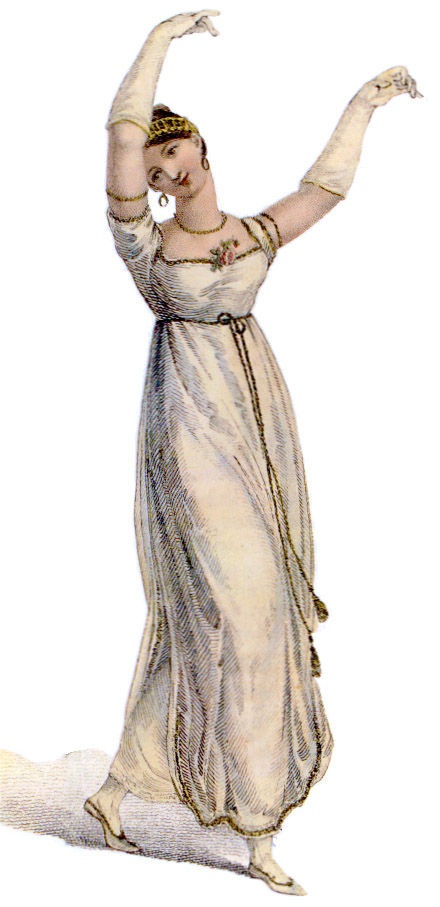
Biblical records tell us all about the celebration. We learn that in the glow of a full summer moon young women would put on white dresses and dance in the fields outside the walls of Jerusalem, while all the single guys would follow the girls in the hopes of finding a bride.

But what we Jews did and how we did it says a lot about the unique perspective Jewish tradition offers regarding romantic relationships. It seems that even in ancient times, Jewish families were attuned to the notion that every young man and every young woman deserved the opportunity to find her/his “B’shert,” the one who was “meant to be.”

What exactly happened on Tisha B’Av? Sages tell us that the girls who danced by the light of the late summer moon were required to wear borrowed dresses.  That was the rule. No one was to make or buy a special dress for the occasion. Instead each girl was to borrow a dress so that the boys who were watching them from afar wouldn’t be distracted by material concerns. The borrowed dress requirement eliminated the temptation for the young man to choose the girl with the most expensive dress, assuming perhaps that the fancy dressed girl was his ticket to marrying into a rich family. Who knew? The girl  girl with the dowdy dress just might be from the richest family in town. 

As the night progressed, the young men moved closer. They were encouraged to begin a conversation with one or several of the young women and eventually to continue the exchange with girls whose interests and values were similar to his own.

Indeed, one of our rabbinic sages advised the young men to observe the dancing with a watchful eye. “Look for the girl whose dancing is joyful and spirited,” advised the rabbi, “because these would be the girls who would bring joy and spirit to their lives. 

In America, in Europe and even in Israel, Tu B’Av is rarely celebrated as it was in ancient times. Now we do Valentine’s day but there are some who believe that the modern holiday celebrated on February 14, has its roots in the ancient Jewish celebration of love.

Could be. It wasn’t so many years after Temple times - 270 years to be exact - that a sourpuss old Roman emperor. Claudius outlawed marriage completely. But one young priest, named Valentine defied the emperor. Claudius was furious when he found out that Valentine was secretly conducting weddings for young couples who were in love and who wanted to marry.

Yet in the face of great personal peril which eventually led to his arrest and murder, Valentine continued to put into action a Jewish directive found in the Song of Songs where we read that “many waters cannot quench love; neither can the floods drown it.” 

Love is strong, the bible tells us, and maybe for our singles out there, this year’s Tisha B’Av will make love will be the order of the day

OK, so there won’t be girls in white dresses dancing in our parks or on our beaches, but there are spirited and enthusiastic men and women out there if  we are willing to look beyond the dress or the suit or the car or the job or the paycheck. So if you’re still out there searching, begin again by looking again at the men and women who cross your path. Look at each other with brand new, Tu B’Av eyes. 

Why? Whether in ancient times or in the modern era,  when it comes to human emotion, God seems to be telling us something really important.  Nothing is stronger than love. 

Hag Sameach and Happy Tu B’Av!


Tuesday, May 28, 2013

Becca's Wooden Box


A Story of Sicily’s Lost Jews

She arrived on Sunday morning, having received an announcement of our meeting several days before. At first she was not certain that the gathering would be appropriate for her, but curiosity overcame her fear and she found herself at the door of an apartment in Palermo, Sicily ready to begin what she hoped would be a positive Jewish journey.

Becca (not her real name) brought her enthusiasm and questions to Chavurah Ner Tamid Palermo. “Chavurah” is a Hebrew word that means “group of friends,” and Ner Tamid is the Hebrew phrase for “eternal light.”  Founded in 2005, this group of friends comprises a small but strong liberal Jewish congregation, dedicated to helping people like Becca establish and embrace their Jewish heritage. Ner Tamid Palermo represents a tiny but strong Jewish flame, that, although the persecutions of the Inquisiton tried to extinguish it, the light of Judaism never died. Dedicated to the “B’nai Anousim” of Sicily – those who were forced into Christian conversion nearly 500 years ago, Ner Tamid Palermo offers a unique opportunity for men and women like Becca to share their stories and make a personal Jewish connection.

We gathered around the table and began our meeting with a discussion of liberal Jewish traditions and concluded with Havdalah, the Saturday evening service that marks the end of the Jewish Sabbath, called Shabbat. But it was on Sunday morning, at our Torah study when Becca arrived with a remarkable story to tell.

“I always knew we were Jewish,” she began, but then added, “I should say I always knew we were different. Later I came to believe that our difference was that we were not Christian but Jewish.”  Becca’s expression, animated now, told the story of First Communion.  “My father, who has since passed away, would not permit me to make the First Communion. I was a little girl and I was very confused. And then there was the wooden box.”

As Becca’s story unfolded, our little group fell silent. Some of us were on the edge of our chairs as we listened to Becca describe the locked wooden box that her father said held their family’s treasures.  Over the years Becca asked her father to open the box and share these wonderful items that she was certain were locked inside. But father never would.  After he died, Becca found the box and assumed that the treasures were personal mementos. Love letters, perhaps and nothing more.

The day came, however when Becca’s sadness subsided and her curiosity about the box returned.  With screwdriver in hand, she broke the lock on the wooden box. Slowly she opened it to find “This!” she exclaimed, extending her hand for us to see. It was a bracelet and etched on it in silver was a delicate “Magen David,” Star of David. 

Becca went on to explain that the box also contained a silver pointer that she later leaned was calld by the Hebrew word, “yad.” A yad is used by the Torah reader to touch each word of the scroll as it is read.. Finally a Hebrew book, an ancient text, also came to light in Becca’s hands.

While we sat in silence, absorbed in Becca’s family story, Vincenzo, our “colla,” the “glue” of our Chavurah noted, “This is the reason we are here today. We are here to give voice to our hidden Jewish experiences, to unlock them as Becca has unlocked her father’s box.”

The pluralistic Jewish movement, of which Ner Tamid Palermo is a part, is a modern, liberal approach to Judaism, that observes “halakah” (Jewish law) as it was intended by our rabbinic sages. Because the word “halakah” derives from the Hebrew word, “holech” which means “to walk,” pluralistic Judaism moves forward, advances and adapts, just as the ancient concept implies.

Ner Tamid Palermo, along with its parent congregation in Calabria, Ner Tamid del Sud, extends the hand of Jewish welcome to Jews of all backgrounds, most especially to the “b’nai anousim” of southern Italy who so desperately want to claim their Jewish traditions that were stolen from them centuries ago. ‘

“Who knows,” said Vincenzo. “All throughout Sicily there may be hundreds of stories locked in wooden boxes.”  Ner Tamid Palermo continues its commitment to symbolically find those boxes unlock the family stories,  and extend the hand of friendship and love to our anousim brothers and sisters as we say to them, “Welcome Home.”

Thursday, May 16, 2013

Kipah Minded


It is springtime now and summer is coming. Vacations are on our minds and these are the days for dreaming big and making plans. Where to go? What to take? That’s what I was thinking about when a congregant asked, “But rabbi, when you are on your vacation will you wear your kipah?”

This question made me think,  “Hmmmm, does a *kipah need a vacation?  Does a rabbi need a vacation from her kipah?” Is there ever a time when I should put my kipah in my purse and just be a “regular” person?

In Parasha Shelach Lekha we find a passage that refers to Jewish clothing.  In Numbers, Chapter 15 verses 37-40 we read:

“The Lord said to Moses:  Instruct the people Israel that in every generation they shall put fringes on the corners of their garments and bind a thread of blue to the fringe of each corner.  Looking up it you will be reminded of all the mitzvot of the Lord and fulfill them and not be seduced by your heart or led astray by your eyes.  Then you will remember and observe all my mitzvot and be holy before your G-d…”

Apparently God is telling us that we can choose items of clothing that will help us to remember who we are as Jews and how we should to behave.

In ancient times the “tzitzit” or the fringes were worn at the hem of a long gown.  Later on they appeared on a undershirt that many traditional Jews continue to wear today.  In the Middle Ages, it was a custom for Sephardic Jewish men to give beautiful fringed jewelry to their wives so that they could also wear fringes.  But the tzitzit are most often associated with the tallit, the prayer shawl worn by many Jewish men and women when they come to the synagogue for Shabbat and festivals. 

For each garment, whether it is gown, shirt or shawl, wearing it is a way to remind ourselves that as Jews we live by the commandments. Like the fringes, the commandments are as close to us as our own skin. Although the kipah is not mentioned in the Torah, wearing one offers the same reminder.  Let me give you an example:

Several years ago I made a visit to Sicily.  I wanted to see the island where my some of my family settled after being expelled from Toledo, Spain five hundred years before. 

When I finally arrived, after about 20 hours of traveling I waited patiently for my luggage to appear at “Baggage Claim.” I waited and waited and waited.  “No problema,” said the woman at the “Lost Luggage” desk.  She said my suitcase would no doubt arrive on the next flight.

Three hours later, after two more flights from Milan had arrived, there was still no luggage.  But there were documents to complete and long lines of passengers who were waiting for their luggage, too.  I felt myself becoming angry and agitated. I wanted to give these clerks a piece of my mind. It was at that moment that I remembered that on my head was my kipah. I was wearing a sign of my Jewishness. I remembered that my kipah is a symbol that serves to remind me of who I am and how I should behave.

My kipah gave me the opportunity to remember that I must treat everyone with dignity and respect. The words I choose and the tone of voice that I use are very important. I know myself.  I can be sarcastic and critical in three different languages or I can say something pleasant. I can choose to speak words that help rather than words that hurt. 

I must be honest. I did not want to speak kindly. I was angry and I wanted to let the Yetzer Hara (bad side of myself)  have dominion over the Yetzer Tov (good side). When I wear my kipah or my Magen David, or any other Jewish symbol, I identify myself to the world as a person of God's covenant.

In the airport at Catania, my hand moved to my head and I touched my kipah. I asked myself, “When annoyances come, how would a good Jew behave?” Yes, I had a good reason to be upset, but my kipah helped to stay calm. My kipah reminded to speak to everyone, including the baggage staff of Al Italia, with kindness and respect.

This is the month when many of us anticipate our vacations. We are making our plans and packing our suitcases.  It is not necessary to pack a kipah or a tallit or for that matter, any pieces of our Jewish jewelry, but it is necessary for us to remember our Jewish heritage, our traditions and our mitzvot and pack them in our hearts.

The answer is, “Yes.” I will wear my kipah on vacation, to mountains, to the sea and to the United States. Wearing it is my way of remembering that no matter how complicated or difficult life can become, my Jewish traditions will help me show dignity and respect to all people. My kipah will remind me of the words of Torah and give me the opportunity to be a “Light unto the nations.” My kipah will help me to behave as a Jew. 


*For more on the history of the kipah, visit an earlier blog post here.


Saturday, April 20, 2013

Colonel David Mickey Marcus: Casting A Giant Shadow Indeed


This week's blog entry is courtesy of our Guest Blogger, Diane Besand. Diane worked with the Italian Jewish Cultural Center of Calabria (IjCCC) to discover and embrace her Jewish roots. Currently she is preparing for conversion and aliyah in Israel.  

I marvel as I look back on these last few weeks of spring...It is our Jewish Spring to coin a phrase.  We have gone from celebrating Pesach and our freedom from slavery in Egypt, to Yom HaShoah (Holocaust Remembrance Day), and then Yom Hazikaron Israel's Memorial Day, with the mourning our dead in wars and terror attacks, including our war of Independence in 1948. 

In Israel these days are marked by great solemnity and respect. Both days at precisely 11:00 AM, a siren wails throughout the country.  People stop what it is they are doing and stand in complete silence, including cars on the highway. The silence is deafening.  Israeli's leave their cars and stand beside them.  Nothing moves. No one speaks.  In the Kanyon, In the Merkaz, in the Shuk everything stops, everyone stands in total silence out of respect for our dead until the haunting wail ends. Israeli's take their mourning seriously, knowing full well the cost of freedom.

But joy cometh in the morning and we celebrate yet another miracle with our Independence Day (Yom Ha’atzmaut). These are times to mourn, and times to celebrate, times to remember and times to look forward to the future....to Sukkot. I am spending these days in America, but my heart is in Israel and it hurts not to be there.  

My mind wanders back to 1944 when another American, Colonel Mickey Marcus, a non-practicing Jew was sent to Europe and according to both1My Jewish Learning and  2Jewish Virtual Library Marcus “witnessed first-hand the results of the atrocities that had occurred in Nazi death camps. In each camp there were piles of uncounted Jewish corpses,” along with those who were so malnourished, they looked like walking dead. Following his debriefing, “Marcus was subsequently named chief of the War Crimes Division with responsibility for planning the procedures used at the Nuremberg trials. Through his experiences, he came to understand the depths of European anti-Semitism. Never previously a Zionist, he became convinced that the only hope for European Jewry lay in a Jewish homeland in Palestine.”

“In 1947 Marcus returned to civilian life, and shortly after the UN voted for the partition of Palestine  paving the way for the creation of a Jewish State.  Almost immediately David Ben Gurion requested Marcus to recruit an American officer to serve as military advisor to Israel.  Unable to recruit one of his friends, Marcus volunteered himself. Not being keen on the idea of Marcus serving himself, The U.S. War Department finally agreed, under the conditions that Marcus not use his own name and rank and disguise his American military record.” 1, 2, 3

“By January 1948 changing his name to Michael Stone, Marcus arrived in Tel Aviv to assume command of the Israeli forces and was confronted with an impossible situation. The older, widely separated Jewish settlements in Palestine were surrounded by a sea of hostile Arabs who also surrounded the newly created Jewish settlements. Israel would have indefensible borders. Its military had virtually no air power” with only a few crop dusters, “a few tanks and ancient artillery pieces, very little arms or ammunition”, and untrained conscripted recruits fresh from Europe. Many of these conscripts had never held a rifle, let alone fired one. “The Haganah and Irgun were effective underground organizations, but had no experience as a regular national army. The Israelis faced well-supplied Arab armies that were determined to drive the Jews into the sea.”1, 2 Other than Israel having one of the finest and well equipped military in the world today, their desire to drive us into the sea has never changed.

Immediately after the declaring of Israel's independence, 15 May 1948, we were attacked from all sides.  Eventually Jerusalem came under siege and was ready to fall. The road to Jerusalem was under Arab control and blocked preventing food, water, guns and ammunition from reaching it. “Marcus ordered the construction of a road to bring men and equipment to break the Arab siege just days before the United Nations negotiated a cease fire. Israel had withstood the Arab assault with its borders virtually intact. In gratitude, Prime Minister Ben Gurion named Mickey Marcus Lieutenant General, the first general in the army of Israel in nearly two thousand years.” 2

“Tragically, Marcus did not live to see the peace. Six hours before the cease-fire began, while headquartered in the village of Abu Ghosh near Jerusalem, Marcus could not sleep. He walked beyond the guarded perimeter wrapped in his bed sheet. A Jewish sentry saw a white-robed figure approaching and not understanding Marcus's English response to his challenge, fired a single, fatal shot. Marcus's body was flown to the United States for burial at West Point, where his tombstone identifies him as "A Soldier for All Humanity." Hollywood would later immortalize Marcus in a movie, "Cast a Giant Shadow", starring Kirk Douglas as Mickey Marcus.“Ben-Gurion put it simply: "He was the best man we had." 1, 2, 3

Tonight as darkness descends on Israel's Independence Day for another year, another spring, I cannot help but think of Mickey Marcus. He was a man propelled by destiny. Finding his Jewish roots, he experienced the results of a world gone mad and the height of anti-Semitism and evil, (Yom HaShoah). He fought and helped Israel keep her new Independence (Yom Ha’atzmaut), and finally he gave his life for that cause, and we honor him and all the other fallen who died that Israel might exist (Yom Hazikaron). Colonel David Daniel (Mickey) Marcus-Israel's American General....An American Jew forever an Israeli.
________________________________________________________________________
Background information on Colonel David Marcus was taken from the following sources:

1.  My Jewish Learning “Mickey Marcus: Israel’s American General”
2.  Jewish Virtual Library “Mickey Marcus 1902-1948”
3.  Wikipedia  "Mickey Marcus"